Paint blistering on the wall beside the fireplace. A tea colored patch where the ceiling meets the chimney. Drips landing on the hearth after the first proper storm of the season. In La Mirada those are the calls that pick up every winter, and nearly every one traces back to one of four entry points on the chimney. Which one it is decides most of the bill.
Four places a chimney lets water in
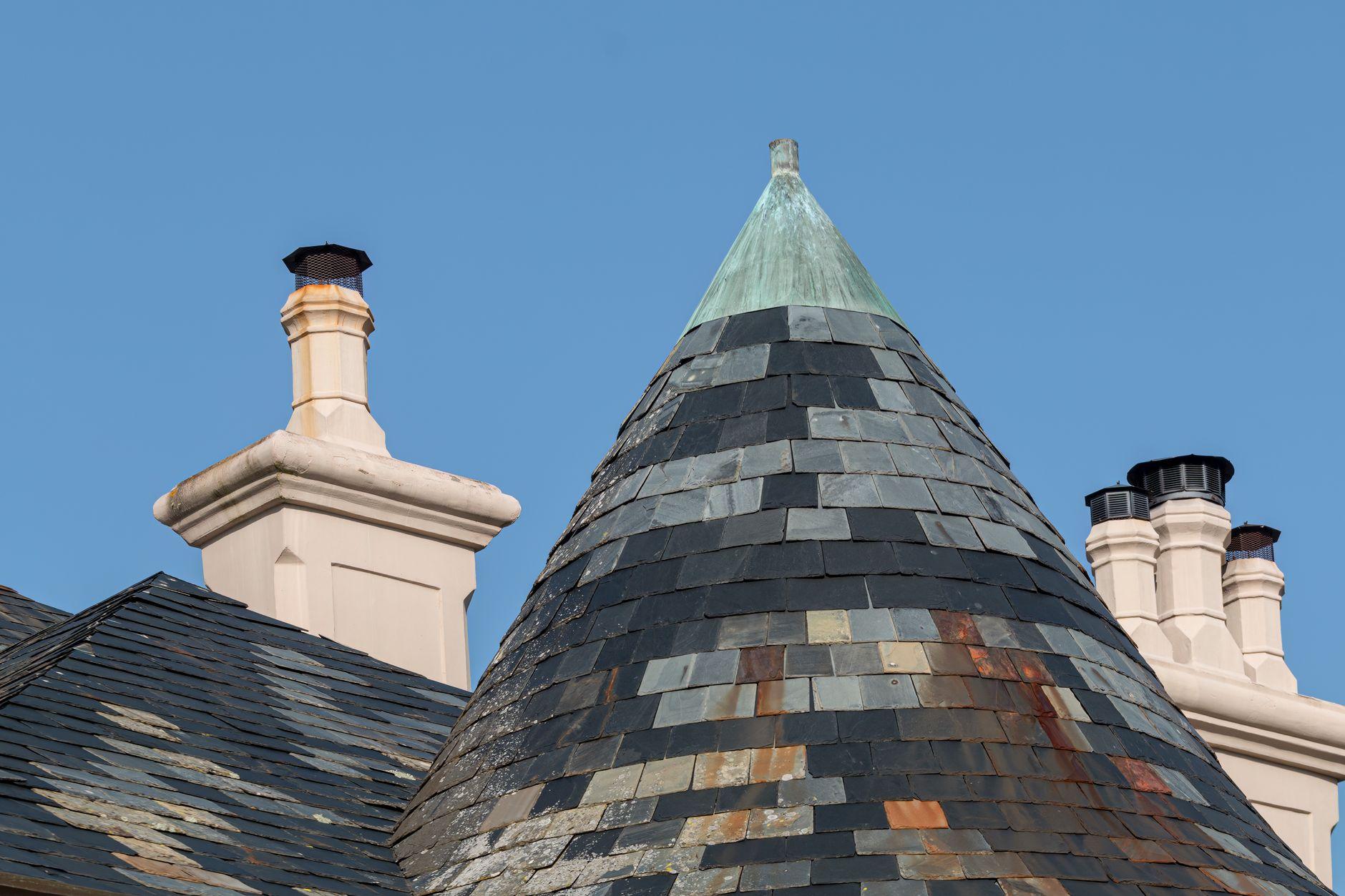
The metal where roof meets brick. Sheet metal bridges the joint between the roof surface and the masonry. On many houses here it went on with the last reroof and has not been touched since. The sealant along its upper edge dries, shrinks and lifts, and wind pushes rain behind it onto the roof deck.
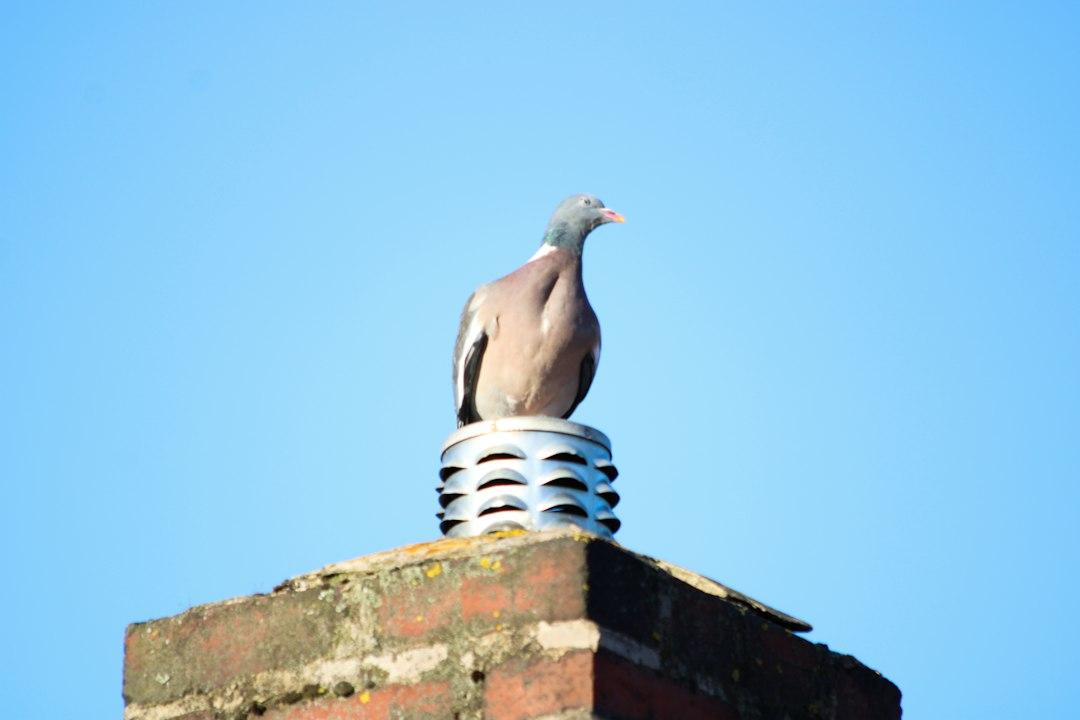
The top of the stack. The cement cap that tops the brick cracks with age and sun. Water soaks into the brick from above. An open flue simply collects whatever falls on it, and that water lands in the smoke chamber or the firebox.
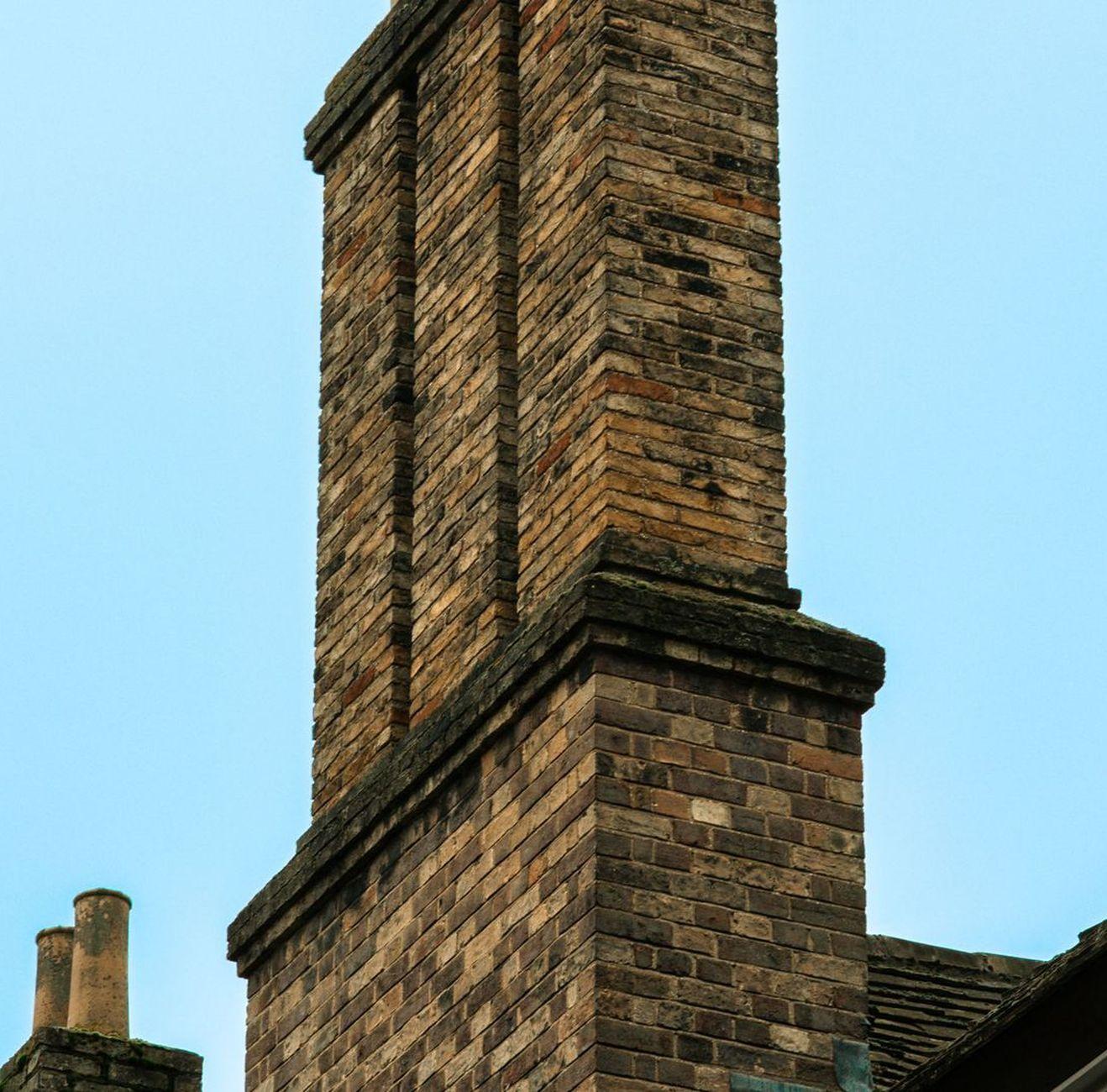
The joints. Mortar wears back over the decades. Once the joints are recessed, each one holds a little water after every shower and feeds it into the body of the chimney. On older La Mirada tract homes this is common on the side facing the weather.
The uphill face. When a chimney is wider than it is deep and sits across the slope, the roof sends its runoff directly at the back of the stack. With nothing there to split the flow, water stands against the metal through the whole storm and finds the weakest seam.
Why the stain is usually not where the leak is
Water moves sideways. It can get in behind the stack, follow a rafter and drip onto the ceiling a couple of feet from the chimney. Guess at the source and you can pay for a repair in the wrong place. So the visit traces first and prices second.
We start on the roof: the metal on all four sides, the cement top, the flue opening, the joints and the brick faces. Then we go into the attic where it can be reached and follow wet or darkened wood back toward where it starts. If the source is still hiding, we wet the chimney a section at a time, working from the lowest point upward, and check the attic after each round until the drip shows.
What the repair costs
Stopping a chimney leak is priced at $535 to $3,200 on our list. Where your house falls depends on how many sources we find and how far the water has already gone.
- Toward the low end: existing metal refastened and resealed, a crack in the cement top closed, a short run of joints refilled.
- The middle: new metal on one or two sides, with the mortar joints that hold it cut out and repacked.
- Toward the top: all new metal around the stack, masonry repair on several faces, or a leak that has run long enough to soften the roof deck under the shingles.
Two add ons come up often enough to list here.
| Add on | Price |
|---|---|
| Diverter built behind a wide stack, by itself | $425 to $965 |
| Diverter plus new metal on every side of the chimney | $640 to $1,600 |
| Stainless top over an open flue | quoted on site |
If the deck itself is soft, a roofer has to replace it. We tell you that on the spot and do not fold roofing into our figure.
Tell us which room shows the stain and roughly when it started, and we will book the trace. The written scope comes back with a price for each source we confirm.
What waiting costs
A chimney leak does not stay the same size. Each storm wets the same timber, and wood that stays damp through a winter starts to soften. Insulation in the attic packs down and stops working. The drywall stain grows and the tape lifts. Inside the chimney, water washes fine sand out of the joints faster than sun and wind ever would, so a joint repair that was small one year is a larger one the next.
The cost of the chimney work itself climbs slowly. The cost of what sits next to it, the ceiling, the framing and the roof deck, climbs much faster. Most of the expensive leak jobs we see in La Mirada, Whittier and Bellflower were small leaks a few winters earlier.
What you receive after the visit
A written scope that names each source we found, where it is, what fixes it and what that costs. Photos from the roof and the attic show you the problem without having to go up there yourself. If we found two sources and you only want to fix one this year, the scope is split so you can.
If the leak turns out to come from somewhere else, a roof valley, a plumbing vent or a skylight a few feet away, we say so and leave it with your roofer. Chimney work that will not stop the drip is not something we sell.
When the leak points to a bigger problem
Sometimes water is the symptom and the chimney has a structural issue underneath: a stack pulling away from the wall, a cement top broken into pieces, brick that crumbles when touched. Those jobs go beyond leak repair. Our post on cracked crowns and leaning stacks covers what those fixes involve, and the flashing comparison explains when a roofer's patch is enough and when it is not.
For the service itself, see chimney leak repair and chimney flashing repair, or the La Mirada area page.
Booking
Stains rarely shrink on their own. Head to the contact page, describe where the water appears and how the roof is covered, and we will set a time to trace it.
Want the Cause Found at Your House?
Langston Chimney Solutions works out of La Mirada. Name the symptom on the contact page; we come out, trace it to the part behind it, and hand you photos with a written price for each fix.